
Evidence and Slogans
The debate around livestock farming increasingly shows how easily scientific evidence can be replaced by simple, emotionally powerful narratives.
- Scientific evidence cannot be reduced to slogans.
- Livestock farming is a complex system that cannot be accurately described by a single figure.
- The scientific method remains the strongest defence against simplistic narratives.
It happens often, scrolling through the comments under a post reporting the results of a study on reducing enteric methane through feed additives, to run into a phrase that recurs almost word for word, from one author to the next, “we all know livestock farming is destroying the planet.” Whoever writes this has, in the vast majority of cases, never opened a life cycle assessment, does not know the difference between a global figure and one referring to a specific production system, confuses biogenic methane with fossil methane, and yet delivers this verdict with certainty.
The anti-scientific shortcut
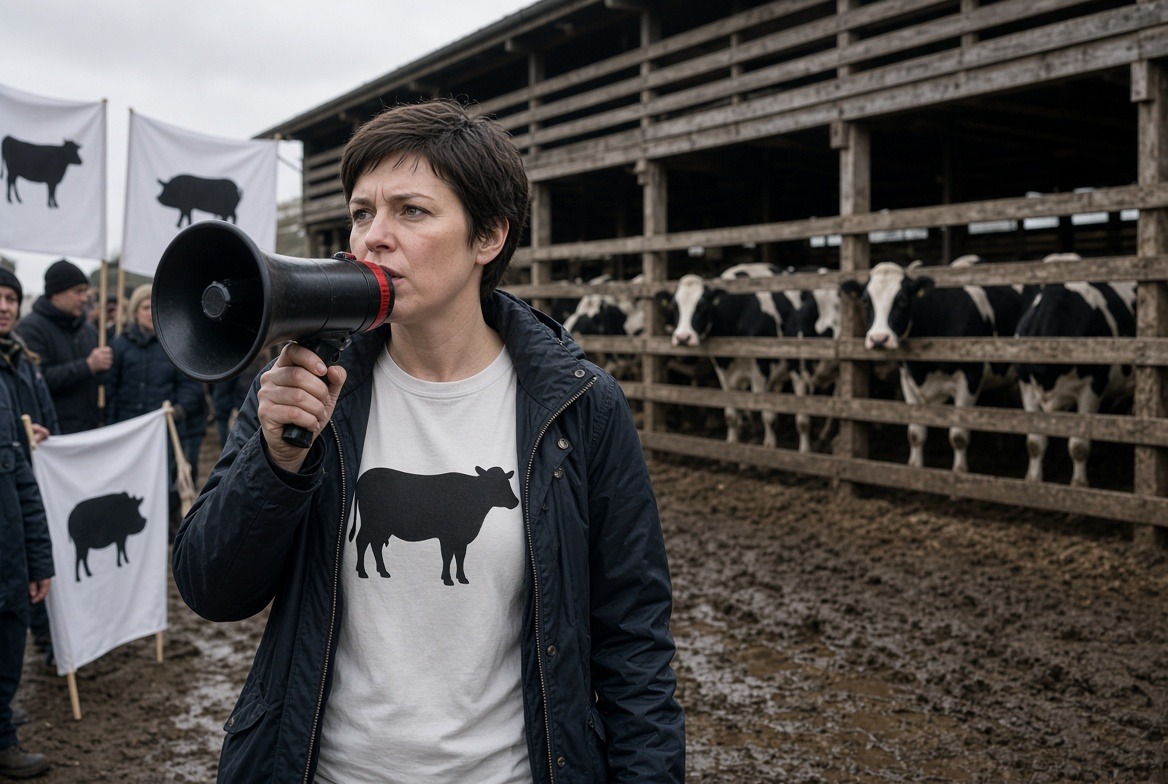
Animal science has long lived a particular version of the anti-scientific climate running through contemporary society more broadly. This is not simply climate denial applied to livestock farming, but rather its mirror image. Where elsewhere evidence is denied, here it is flattened into a slogan, reducing decades of research on animal science to a single moral equation in which meat is guilt and plants are redemption. The complexity of livestock systems disappears behind one single figure, repeated without context and without the methodological details.
The same pattern repeats when the subject is genetic selection, branded as unnatural manipulation by those who have no idea how much population-level work, how much genomics sits behind a selection index. Or when the subject is precision livestock farming, often portrayed as a cold, algorithmic policing of animals, when anyone who actually works with it knows that sensors exist above all to detect, early, the distress of a single animal within a herd of hundreds, something no human eye, however experienced, could do with the same consistency.
Information is not knowledge
Access to information does not amount to knowledge. Scientific journals in the field, conference proceedings, genetic databases are now a click away for anyone, and yet public debate about livestock farming feeds increasingly on polarized narratives, little interested in the evidence produced by those who work on these questions every day, and far more drawn to the rhetorical force of an image or a slogan able to travel across social media better than any data table ever could.
It is not the job of animal science research to convince those who refuse to listen. It is its job, however, to keep producing, rigorously, the data that allow those who genuinely want to understand to do so, and to defend that data publicly when it is misrepresented. The patience of the scientific method, once again, remains the only credible bulwark against the shortcut of certainty.
Source: Newsletter EAAP n.297


