
Red meat contains a nutrient that helps fight cancer
An important confirmation of what has been known for some time: in red meat, beef and sheep, and dairy products, there is a nutrient that improves the immune response to cancer.
The evidence comes from a scientific study published in Nature, which aimed to evaluate the effect of nutrients circulating in the blood on the physiology of our organism. The nutrients derived from what we eat provide the biosynthetic building blocks and regulatory molecules at the basis of the various physiological processes, and it is one of the great goals of science to explain the mechanisms by which they affect our health.
In this great scientific work, researchers at the University of Chicago started with a database of about 700 known metabolites derived from food and assembled a library of “circulating blood nutrients” consisting of 235 bioactive molecules from plant and animal foods. They then screened the compounds in this new library, selecting those candidates with the greatest adjuvant effect in anti-tumour therapies and highlighting SIX.
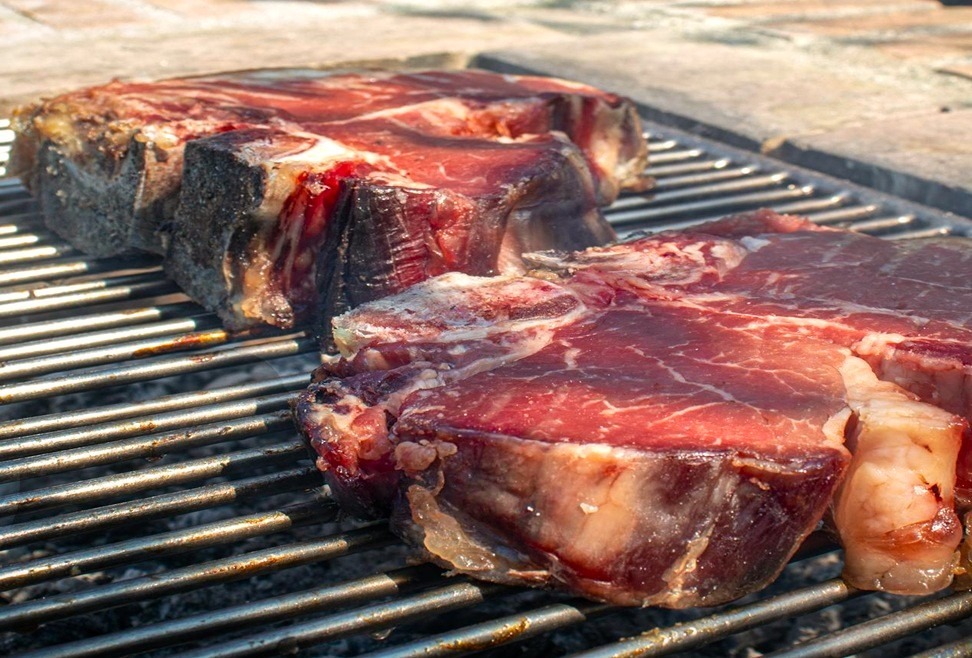
Among them, dietary trans-vaccenic acid (TVA), which is mainly found in red beef, lamb and dairy products such as milk and butter, won this “competition” and proved to be the most potent and effective natural compound for directly promoting CD8+ T cell function and antitumor immunity in vivo. CD8+ T immune cells are also called killer T cells because they have an important cytotoxic activity, i.e., they can directly kill virus-infected cells and tumour cells. Their function is, therefore, essential to protect us from cancer and disease development, and TVA can enhance their activity greatly.
TVA is the predominant form of trans-fatty acids, which our body cannot produce itself but must necessarily be supplied by food. 80% of dietary TVA remains in the bloodstream, so the authors hypothesized that it has fundamental functions and studied it in detail. The remaining 20% is converted into other by-products, such as rumenic acid, one of the conjugated linoleic acids (CLA) we know well for its countless beneficial properties and effectiveness against cancer.
Food-grade #TransVaccenicAcid, which is found especially in bovine #RedMeat, #lamb #meat and #dairy products directly promotes #antitumor #immunity in vivo. Share on XThese long-chain fatty acids are derived from ruminal dehydrogenation processes of unsaturated fats, which is why they are mainly found in ruminant-derived foods, suggesting their effective role in improving the ability of immune cells to fight tumours. In particular, TVA from beef, lamb, and dairy products enhances CD8+ T cells to infiltrate tumours and kill malignant cells, representing a valid tool for increasing the efficacy of clinical treatments against cancer.
“Many studies are trying to decipher the relationship between diet and human health, but it’s very difficult to understand the mechanisms because of the variety of foods people eat and the complexity of metabolism. But if we focus only on nutrients and metabolites that come from food, we can begin to see how they affect physiology and pathology,” says Jing Chen, PhD, professor of medicine at the University of Chicago and one of the study’s authors. “By focusing on nutrients that can activate T-cell responses, we found one that enhances antitumor immunity by activating a key immune pathway. TVA is the most abundant trans fatty acid, and patients with higher levels of circulating TVA in their blood responded better to immunotherapy.”
The researchers then conducted a series of experiments with different types of tumours and found that mice fed a TVA-enriched diet significantly reduced the tumour growth potential of melanoma and colon cancer cells compared to mice fed a control diet. They also analyzed blood samples from patients undergoing cellular immunotherapy treatment for lymphoma. They confirmed that patients with higher levels of TVA tended to respond better to treatment than those with lower levels. They also tested leukaemia cell lines and found the same results, finding that TVA improved the ability of immunotherapy to kill diseased cells.
This new approach to research could lead to significant advances in understanding how individual nutrients in the diet affect immunity and other biological processes, such as ageing. The results of this study reaffirm the importance of a complete diet of all foods because what we eat affects our health. It would be a shame to deprive ourselves because of misconceptions about foods that, as we advance in scientific research, continue to amaze us with their surprising properties. And who knows how much more there is to discover?